Tuesday, August 5, 2014

Don’t Let “Rule of Law” Curb Compassion for Immigrant Children


What, me scared?
Recently I had a nightmare. It was the kind where I kept trying to wake up but couldn’t. It was especially frightening because it involved children. Yours and mine.

Times were hard; like the Great Depression but much worse. The economy was a wreck and I was out of work. Unemployment soared, the result of some foreign power manipulating our nation’s economy. Trusted systems of support, like federal and local governments, police and fire departments, had essentially collapsed. Access to water and power was spotty at best.

Local militias had risen to restore order; yet had resorted to trafficking illegal drugs to fund their efforts. The result was violent, bloody combat between factions. My once stable community had become a bonafide war zone. It was the same across the country and no place was safe.

About the only thing going right in life was my family. In the dream, our kids were preteens, maybe teenagers. They were always hungry. It had gotten to the point where we couldn’t afford to keep up their clothes. So they often went to school in tatters. When school was open.

In my dream we were so poor, scared and hopeless I remember thinking I’d do anything to get my kids out of the situation. I considered working for one drug-funded militia or another, but knew sooner or later I’d end up dead, probably my kids too. Besides, that option just wasn’t in me. Still, I was desperate.

Children: by any other name
Then I was told of a place where there was opportunity. A faraway place where my kids would have a chance to grow up and live a humane life. But we only had enough resources to send my kids there, so we’d probably never see them again. The place had its own set of problems and I remember thinking sending them there was madness. And yet staying here was too dangerous.

I remember agonizing over what to do. Then, after a particularly terrifying night of warring in the streets of our neighborhood – one in which our neighbor’s daughter was killed – we made the decision: we’d send our kids to that faraway place.

There would be no friends or relatives there to greet them. Instead, we’d have to rely on the benevolence of the good people we were told lived there. A place of freedom, compassion and most of all, hope. The United States.

For me it was just a bad dream. But for many parents and children in some Central American countries, it is literally a living nightmare. From where I sit, my modest but comfortable Midwest home, sending my kids to a distant country for their survival seems impossible to imagine. At the same time it doesn’t. Because I love my kids that much.

We all need to work harder at stepping out of our self-centered worlds to really examine what’s going on elsewhere. There are places where violence and harm are systematically perpetrated on the innocent. From the comfort of our living rooms, it all can seem unreal, but it is real. Just because it isn’t happening here doesn’t mean it isn’t happening. Or that it couldn’t happen here.

It’s time to set aside politics and harsh, emotionally empty phrases like “rule of law” and look with greater empathy at what’s happening to vulnerable Central American children and others who are undocumented. Remember, it was once the rule of law to force Native American relocation, enslave African Americans, intern Japanese Americans, and sterilize many with disabilities.

Let’s instead embrace and nurture child refugees arriving here to escape poverty and violence. To do otherwise is contrary to human rights. And that’s un-American.

 
Follow J.R. on Twitter @4humansbeing or contact him at 4humansbeing@gmail.com.

Friday, August 1, 2014

Practice Expanding Your Point of View


Finally it’s happened. After all these years. About time too. Following decades of bewilderment and confusion, everything’s clicked and I’ve joined the masses. I finally appreciate the game of soccer!

For the longest I’ve tried to embrace it. After all, I consider myself a worldly man and soccer’s the world’s game. More than 250 million players in over 200 countries play it, according to Wikipedia. That makes soccer the most popular sport on Earth. Sorry Baseball.

It took a while. A long while. Hours of watching. Years of questioning. But at long last it’s official: I love soccer. It happened sometime during this year’s World Cup.

One moment I’m watching guys run up and down the field aimlessly kicking the ball to each other, trying to score. The next, I’m witnessing artful athletes exhibiting uncanny control of their bodies to execute a team strategy to outdo their opponents. Why did it take so long?

Winning hit or errand pitch: depends on your viewpoint
Speaking of baseball (my favorite sport), it was a similarly long road for me regarding that venerable game. Prior an epiphany about baseball, my understanding of the game was limited to my Little League experience: throw the ball, hit the ball, catch the ball. No thinking; just doing.

My eventual appreciation developed about the same way it did for soccer. Actually, in the case of baseball, it also took a six-pack of beer (in my 20s) and an expert friend of mine patiently explaining the game’s rich complexity.

So it was with football; the U.S. variety. For years as a kid, the game seemed merely to consist of two teams hurling their bodies violently into each other. I thank TV’s 50 yard line viewing angle of the game for my limited outlook.

It took going to a college game and sitting in nose-bleed seats to understand linemen weren’t simply hitting the opponent directly in front of them. They were pulling, cross-blocking, drawing and all sorts of schemes with the hike of the ball. Viewed from that higher angle, things were completely different.

The game changer in all these cases? My point of view. That is, I shifted my perspective in ways that offered a different manner of looking at things. Easier said than done in a lot of instances, and not just sports.

Expanding your viewpoint can open your mind’s eye to new possibilities. Trouble is, we often get stuck believing our point of view is rooted in hard fact. Actually, in most instances, how we think about things is based on previous experiences, mood, cultural norms, our health… any number of factors. All of them can conspire to persuade us in one direction or another – regardless of what is truth.

Such misperceptions become problematic when a person’s point of view about important social issues, like matters of race, comes into play. It can be easy for a white person to say he doesn’t see color. Easy, because his perspective is rooted in experiencing the world as a white person. And the majority of systems, policies and media convey the perception that “white is right.” And that’s wrong.

Same stairs: two outlooks
The same can be said of nondisabled individuals such as myself. For instance, attending a ball game for me consists of little more than driving there and buying a ticket. No big deal.

A person with a disability might hold a more complex perspective. Depending on their ability, will the ticket booth be low enough to buy a ticket? Are there elevators or just stairs? Will there be accessible viewing spaces for little people or for those with wheel chairs?

It can be challenging and even feel impossible to expand your viewpoint. Yet when things finally do click, it can all be worthwhile. And I’m not just talking sports.
 

Follow J.R. on Twitter @4humansbeing or contact him at 4humansbeing@gmail.com.

Monday, July 21, 2014

Give Yourself the Gift of Difference


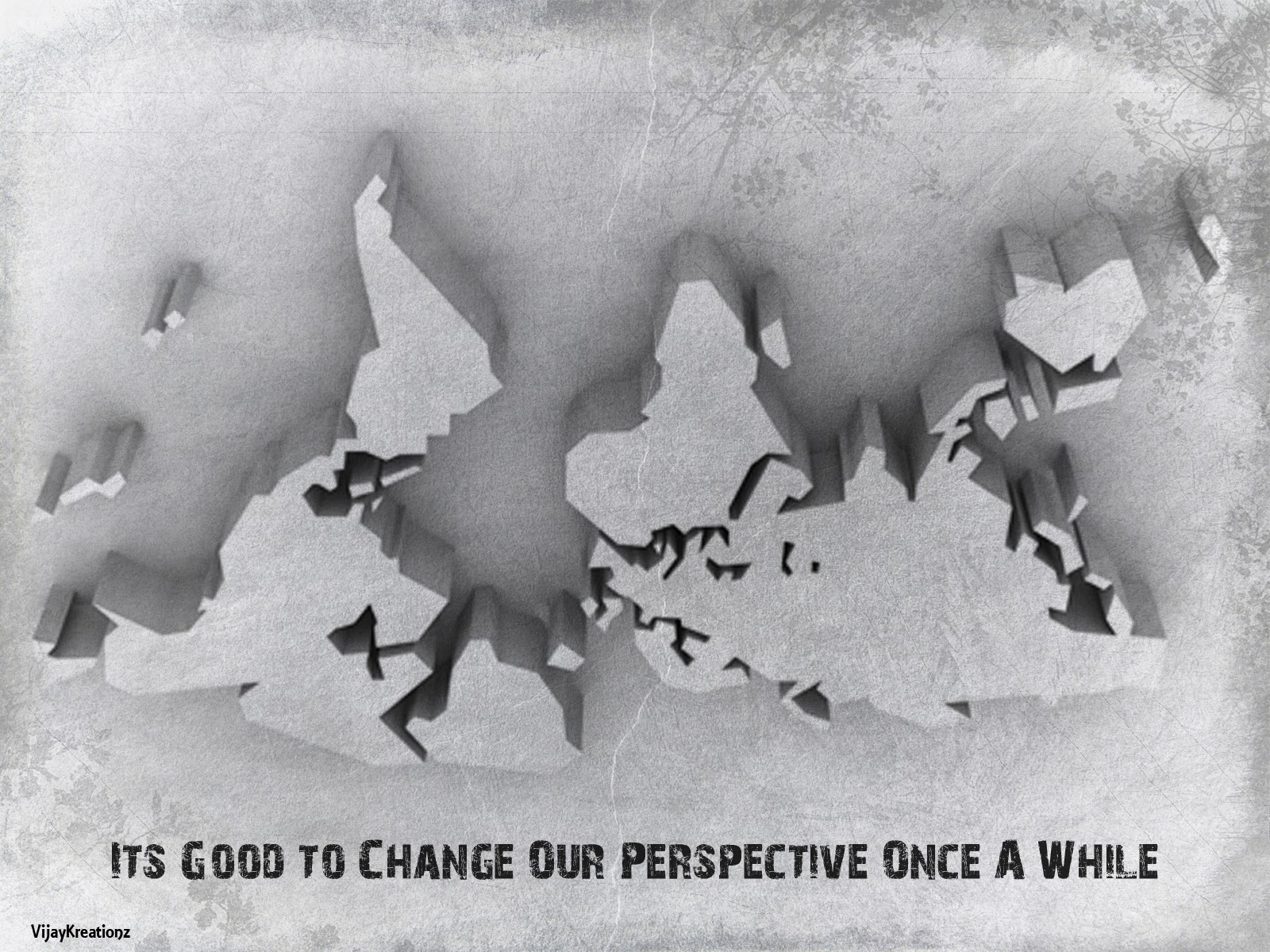
It's understandable why we thought the world was flat.
Trouble is brewing in the science world. Don’t worry, experts still agree the Earth is round. However, a growing list of neuroscientists in Europe are poo-pooing the ambitious undertaking known as the Human Brain Project (HBP). HBP is bankrolled by the European Union and the goal is to recreate the functioning of the human brain using supercomputers.

What does this work have to do with average Joes like us who go to work every day and live regular lives? More than you think, but we’ll get to that in a moment.

According to news reports, more than 150 European scientists penned an open letter to the European Commission (the executive body of the European Union). They are threatening to boycott the HBP project.

The letter bears a series of suggestions for project improvement. They come in the form of seven bullet points. At the top of the list is concern about who is involved (or rather, who isn’t):

“The panel should be composed of highly regarded members of the scientific community whose views reflect the diversity of approaches within neuroscience.”

One bad apple? Or a fruitful start toward greater diversity?
The key word in that initial bullet point is “diversity.” That’s important for a lot of reasons, beyond what’s happening with HBP.

An all too familiar misstep that saps the strength and hamstrings the growth of any community – not just the science realm – is to marginalize the value of diversity in planning. What’s equally bad is to deny diversity in participation. Yet that’s what happens time and again when it comes to leveraging a diversity of professional relationships on the job. It can be similarly so when it comes to tapping into diverse human resources long after we’ve punched out for the day.

The sad truth is that too many of us fail to realize the incredible assets available to us by not maintaining diversity in our personal tool chests. Yes, I’m guilty of it.
 
             Similarity and difference; it’s the nature of the universe. From falling snowflakes to interplanetary star systems, no two are alike. Yet among each group they share close comparison. The same is true when it comes to human beings.

Don’t think an unsighted person can teach anything to a sighted person? One way might be how to use your other four senses to take richer stock of an environment – even in broad daylight.

What can a poor person teach someone who’s rich? Maybe uncanny resourcefulness to survive, despite not having the privilege of an advanced education, a sufficient bank account or friends in high places.


What's wrong with this person? Absolutely nothing!
What can a gay couple teach a straight one about family systems? Perhaps a number of nontraditional ways coupling can effectively operate and be equally happy – and in many cases more so.

What can a person of color teach someone white? For one, how it feels to be enmeshed in a systematically repressive society (many claim doesn’t even exist) yet still function with grace and compassion with the oppressor.

Each of these examples feature non-dominant or marginalized groups doing the teaching and that was intentional. But the reverse is equally true; learning happens both ways. One “merely” has to reach out and dare to create new relationships. Start with those with whom you highly regard, but make the interaction personal and your motives transparent.
Diversity is about so much more than color
Initial attempts will be uncomfortable. This is normal. Just study history. It was equally the case when the first scientists produced undeniable evidence the Earth wasn’t flat. Then as now, the discomfort will pass. What will be left? New perspectives holding limitless possibilities.

So do yourself a favor: give yourself the gift of difference in your relationships. You’ll be better for it, in more ways than one.

Follow J.R. on Twitter @4humansbeing or contact him at 4humansbeing@gmail.com.

Tuesday, July 15, 2014

Meeting Someone can be Wonder(ful), if You Remain Open

Eye Sea U
            When it comes to judging people – or rather, not judging them – folks like me, with full use of our eyesight, are at a distinct disadvantage. At least that’s how I see things.

It seems most of us who can see, tend to do so only with the two orbs in our head. But there’s more to seeing than what our brain receives through eyeballs.

I’ll never forget meeting world famous performer and Grammy Award-winning singer, producer songwriter Stevie Wonder. What happened many years ago during that celebrity encounter was a first big step toward my developing a clearer understanding of myself… and how I see others.


It was at a Hollywood party and I was introduced to Stevie by a mutual friend. After our hellos, he invited me to sit with him. After settling in at the table and meeting the others with him, he extended his hands in my direction and asked me to take them.

His request wasn’t so much startling as it was unexpected. After a beat I did as he asked, figuring it was his unsighted way of initiating a handshake. But his request was more than a greeting. So much more.


Stevie Wonder: he sees beyond sight.
I placed my hands in his and gripped firmly, using the same steady pressure I apply when shaking any person’s hand. Instead of responding in kind, he started talking. It was the normal getting-to-know-you stuff, except for two things: one, Stevie Wonder was asking the questions; two, we were holding hands.

There I was, literally embracing a legend. And a stranger at that. After several minutes of conversation he gently released his hold.

“Why’d you do that?” I asked.

“I like to know who I’m talking to, and it helps me feel their energy.” He went on to add that he gets a wide-ranging sense of a person through this exercise. He was right.

Turns out our eyesight does a most effective job of interrupting our ability to see people for who they really are, rather than who we imagine them to be. This distorted view might be akin to self-fulfilling prophecy: we see what we want to see.

Big or small, sighted people are plagued with the amoral affliction of assessing the ability of a person based on how they look. We have each other to thank for that, and to a large extent, the media.

Tall or short, we ignorantly assess each other based on physical characteristics that are largely unrelated to how a person truly is. Instead, we rely on unhealthy social “conditioning,” which tells us to ignore what we know to be true in favor of what society insists is normal.

Light or dark, we sighted folk pound into each other warped group-think fallacies that the color of our skin holds significant insight into who we are dealing with.

Those with 20:20 vision, or even 20:200 like me, largely consider the so-called physical imperfections of others as somehow qualitative measurements of their character. And most of the time we are wrong, especially when we bump up against our admitted as well as unconscious prejudices. At least I know I am.

So I remain a work in progress, constantly fighting against self-deluding prejudgments of others based on how they look. This “vision sickness,” as I refer to it, robs me of rich and productive opportunities to get to know others. Many of us use this nonsense in place of common sense to mistakenly guide us to consistently wrong conclusions.

Keep all this in mind the next time you have the chance to shake someone’s hand.

Follow J.R. on Twitter @4humansbeing or contact him at 4humansbeing@gmail.com.

Tuesday, July 1, 2014

Words to the Wise: Some Phrases are Loaded

Loaded for bear
Recently, I read something that at first felt mildly annoying. On deeper reflection I became downright angry, but not at the person who wrote it. Instead I was irritated at myself over how long it’s taken me to realize (and accept) how damaging it is to see such things in print. Or hear them spoken out loud.

The offensive line was written by some human resources guru. The writer had penned a column on how to maximize your web presence as it relates to online job hunting. Specifically, the article listed simple mistakes that make job candidates look bad when creating an internet profile (i.e., short biography).

It was decent information. The items listed seemed reasonable enough, except for one thing; or rather one word.

What had chapped my hide was embedded in one of the article’s bullet points; it included the word “lame” to describe what not to do.

“Lame” is loaded with meaning, beyond the simple Webster definition of the word. Used in certain ways, it has come to be quite damaging and not for reasons obvious to most nondisabled people. In fact, it can all seem largely invisible or even irrelevant. That is, until you think about it.

Uphill climb
The painful thing about this is that until rather recently I have been guilty of writing/saying the exact same thing as that writer for that online human resources column. The crime? Employing words that describe a situation or thing that inadvertently casts persons with disabilities in a “less than” light.

Using “lame” and certain other words as negative descriptors casts an implied deficit toward people who are disabled. Initially legitimate clinical terms, such words are or have been historically used to by nondisabled people to describe those who are disabled. Over the decades they have been hijacked by mainstream language some of the worst ways.

“That movie was lame.” “How could you have been so blind?” “It’s crippling to think that way.” “You’re insane.”

In each case, there’s nothing positive about what’s being described, insinuated or stated. For those of us who are nondisabled, we live with a privilege that embodies a presumed competence. In other words, we wrongly (and arrogantly) assign a “can’t” to persons who, for instance, use a wheelchair, walker or cane.

As a result, we unwittingly project false negative connotations to physical and mental conditions in which some people live. That’s a travesty. Who are we to define the quality of another person’s life?

For most folks it’s easy to let such harmful references slip past and ignore it. Yet in doing so, that’s one more statement that unconsciously reinforces a form of silent oppression. This toward a group of human beings who have historically been ignored, institutionalized and marginalized and oppressed by elements of nondisabled society.

Just a typical fun-filled day
Hard as it was, I gently pointed out to the writer of that column that the way she used “lame” was inappropriate and why. The next time, I imagine it will be somewhat easier to do. I also am doing the same when hearing these words used inappropriately in my presence.

Equally important, I am monitoring myself, for I have been as guilty as the next nondisabled person in their use. I invite everyone to hold me accountable when I fall short, which I surely will.

It’s only by continuously pointing out the damage these statements cause that we can change our way of thinking about inappropriate word and phrase usage. I am no longer willing to let them go unrecognized for the oppressive messages they are, unintentional or otherwise. Will you do the same?

 
Follow J.R. on Twitter @4humansbeing or contact him at 4humansbeing@gmail.com.
Wednesday, June 4, 2014

“Tribal” Policies Unintentionally Discriminate

How many identities do you see?
We live in a world of tribes. Everybody belongs to at least one. Most of us hold membership in several, intended or unintended. These tribes are woven into the very fabric of our society. Each has specific requirements and most aren’t written in any book. Members just know them. That can be a good thing because it can strengthen unity and forge trust. It also can lead to less than desirable conditions if unchecked.

Some tribes are obvious because they possess visual signifiers. That is, you can immediately see their identity. Uniforms and special clothing are hallmarks. Easily recognizable tribes include: armed forces personnel (Army, Navy), fans of specific sports teams (MSU Spartans, Detroit Tigers), and express mail delivery staff (UPS, Fed Ex).

Other tribes can be identified visually but may require closer inspection, verbal cues or actions. These might include senior business executives, factory workers, country club members, or the homeless.

Kool and the gang.
The interesting thing is that most of these bands consider their groups open and inclusive. But typically there’s an unspoken caveat: “you can join as long as you fit in.”

Tribes tend to communicate in specific ways. In order to be a member, you have to know the language. If you don’t, you’re going to have a hard time – and may be denied many of the privileges granted within that tribe.

What’s more, you have to understand and appreciate cultural nuances. You must walk the walk as well as talk the talk. Even then you still may have a problem. Or they may have a problem with you.

A sobering fact is that just because you want to join a tribe doesn’t mean it wants you. There usually are other conditions; some cut and dry (ex., be a resident of a place), others less so (ex., the right experience). Some requirements can be learned or developed, others are simply impossible to attain. Things like looking a certain way physically, beyond clothing and attire. Or ways of being such that if you’re are born with it, you’re in. If not well, you might still get in, but it will be made to feel second class.

Too tall, too short; too light, too dark; too small, too large; too straight, too gay; disabled, nondisabled; rich, poor. The dichotomies seem endless, and can play out in ways that usually don’t result in your favor.

Bad apple, or simply trying to fit in?
“Then don’t join,” many might suggest. Yet sometimes in order to get ahead, you have to join a tribe of which you have little understanding or apparent resemblance. What inevitably happens though is that you fail. Or flounder.

Generally, three reasons contribute to this: one, you can’t or won’t participate in the culture (ex., drinks after work) of the tribe. Two, you don't know the rules of the tribe (i.e., interpersonal politics) and no one shares with you what those rules are. The third is prejudice.

That brings us to how tribal membership can create difficult conditions for those they believe do not belong. Another way to put it: exclusion. This typically manifests when a specific group is so dominant in numbers that nonmembers find themselves being oppressed.

A particularly disconcerting aspect of this dynamic is when the dominant group can’t even recognize that its ‘membership’ requirements and behaviors are damaging. They also serve as barriers to success, whether consciously or unconsciously addressed.

In the end, dominant cultures would do well to remain vigilant against unintended discrimination that’s based on qualities that are ultimately irrelevant. Such watchfulness can help ensure equality for all.

Spring Brings Out the Best and Worst in Us


At last, it’s spring. The calendar said it arrived way back in March but much of the Midwest didn’t get the memo. After a long two months of see-sawing cold to warm then cold again, winter’s last vestiges finally seems to have waned. Only potholes remain.

The frigid Polar Vortex of 2014 is now a memory. In its place are leaves that have erupted from the branches of formerly dormant trees. Plants have sprouted, grass is green and weeds are growing. Photosynthesis is in full effect.

Now that winter has passed, many of us will soon be plagued with warm weather issues. At the top of the list is the arduous ritual known as spring cleaning. In addition, inside and out, critters will be on the rampage. Some already are.

Moles turn lawns into underground highways, woodchucks burrow in inconvenient places (like beneath the house) and pesky ants terrorize household interiors. Then there are flies. And don’t get me started on the subject of mosquitoes. Same pests, different year.

There’s another kind of vermin, one of a two-legged kind. Some say inhuman; others, inhumane. That’s because the problems they bring can be quite disturbing, in terms of the drama and trauma they cause. Though they can certainly be found in and around households, like other springtime pests, they are typically found in public spaces.

Warm weather brings with it increased outdoor play activities. Already, SUVs can be seen tooling around, engaged in the annual ritual of lugging road and trail bikes to recreation destinations. Increasingly, with each passing Saturday and especially in the morning, we’re also seeing more and more soccer moms and dads driving minivans packed with kids and sports gear. Sometimes they’re also carrying a major problem.

On the field is where it occurs. More specifically on sidelines during Little League or soccer games. That’s when we witness the annual misbehavior of certain parents engaged in unsportsmanlike conduct, supposedly on behalf of their kids. And it can get downright ugly. It’s sad but true: some moms and dads get way too emotional during their children’s games.

A small minority cause a majority of the mayhem. Some of them are regulars. They seem to come from all walks of life and bring with them an irrational fervor that belies the nature of the youthful competition occurring on the field. However, some are professionals, it seems.

Take former Major League Baseball pro, Mitch “Wild Thing” Williams. Being a fan of the game, I had come to know Wild Thing for the sometime lack of control of his pitches on the mound. Now it seems Williams’ nickname stands for something more nefarious, such as misconduct at his 10-year-old kid’s baseball game.

According to media reports, the 49-year-old was coaching his son’s team and was ejected after arguing with the umpire and disrupting the game for 10 minutes.

That Williams was reinstated when it was determined the umpire had also behaved inappropriately is beside the point. An ex-MLB player should have behaved better, especially in front of children. The same is true of the umpire, whatever his role was in contributing to the incident.

The point of the matter is that there are bigger emotional fish to fry than engaging in a knock-down-drag out over whether a kid is safe or out. How about making sure youth are actually enjoying themselves even as they compete? How about exhibiting higher standards of maturity when things don’t go your way?

As spring moves toward summer, let’s all try and model good behavior and respect for each other. Do it for our kids. Do it for each other.